
Before You Request Transactional Funding: Get the Deal Ready
Most transactional funding requests don’t fall apart because a lender says no. They fall apart because the deal wasn’t actually ready when the borrower reached out. Too often, a wholesaler or investor lines up an A-to-B-to-C double close, calls for funding two days before closing, and then discovers the title work isn’t finished, the B-to-C contract has a financing contingency instead of a cash close, or the settlement agent has never handled a same-day double close. At that point, no amount of capital can fix a broken timeline.
Transactional funding is short-term, same-day money. Its only job is to let you buy a property for a few hours or a day, then immediately resell it, without tying up your own cash. That structure only works if every other part of the deal (title, contracts, escrow instructions, and the end buyer’s funds) is already locked in before you ask for funding. The lender isn’t looking at your credit score like a bank would. They’re looking at whether the deal itself can actually close, cleanly, on the day it’s supposed to.
Let’s break down what “deal ready” really means, what I look for before funding a same-day double close, the red flags that stall or kill a request, and a practical checklist you should run through before you ever pick up the phone. If you want the mechanics of how funding actually moves through escrow, see The Ultimate Guide to Transactional Funding & Double Closings and Transactional Funding.
What Transactional Funding Actually Requires
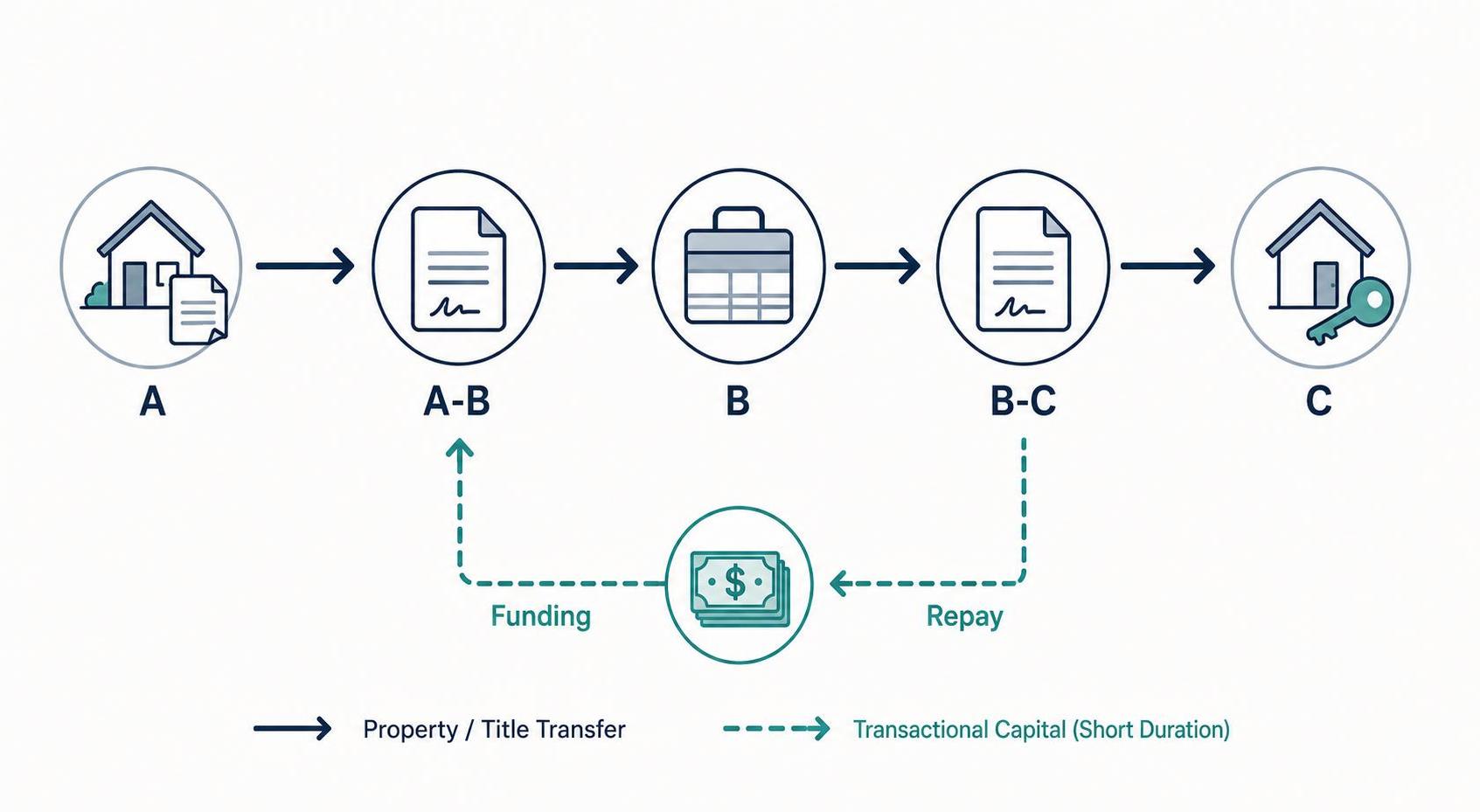
Transactional funding is about collateral and timing, not your credit. A lender funds the A-to-B leg because the B-to-C sale is already under contract, the end buyer’s funds are confirmed, and both closings are scheduled to happen back-to-back, usually at the same title or escrow company. The lender’s risk is measured in hours, not months, and everything depends on the paperwork being in order before you ever request the money.
This is a different kind of underwriting than most borrowers expect. It’s not “can you afford this loan?” It’s “will this transaction actually close today, in this order, with this documentation?” If the answer isn’t a clean yes, the deal isn’t ready, no matter how strong your track record is.
For a deeper look at the sequencing, see How Transactional Funding for Double Closing Works in 2026. The short version: the A-to-B closing has to fund and record (or be held in escrow, depending on state practice) before the B-to-C proceeds can pay it off. The lender is repaid the moment the second closing funds.
Why Deals Get Rejected or Delayed at the Last Minute
In my experience, last-minute delays and declines almost never come down to loan amount or borrower experience. They come down to a handful of gaps in the file:
No confirmed end buyer. The B-to-C contract might exist, but the end buyer’s financing hasn’t cleared, or worse, there’s no end buyer yet and you’re hoping to find one before closing. Transactional funding isn’t a bridge to a buyer who might show up. You need a real, funded, closing-ready buyer already under contract.
Title isn’t clear or hasn’t been searched. If a preliminary title report hasn’t been pulled, or it comes back with liens, judgments, or an open probate, the closing date on the calendar isn’t real.
Settlement agent hasn’t done a double closing before. Same-day double closings require specific escrow instructions and disbursement sequencing. If your title company or attorney has never handled this, they might combine the closings on a single settlement statement or accidentally disclose one transaction to both sides. That creates compliance and disclosure problems. The CFPB’s closing disclosure guidance and ALTA Settlement Statement standards exist for a reason: settlement statements need to itemize charges accurately and separately for each side. That discipline is even more important when two closings happen back-to-back in the same file.
Mismatched or unrealistic numbers. The spread between the A-to-B price and the B-to-C price has to be big enough to cover the transactional funding fee, title fees on both legs, and any other closing costs, with real margin left over. If the numbers are tight or you haven’t run them, that will come out during review.
No buffer in the timeline. Scheduling a same-day double closing with no room for error, or on a Friday afternoon before a holiday, creates unnecessary funding risk.
None of these are rare problems. They just need to be solved before you request funding, not during.
What I Would Review Before Funding This
When a transactional funding request lands on my desk, here’s what I’m looking for, in order:
- The A-to-B purchase contract. I want to see the price, closing date, no active contingencies, and confirmation that you or your entity is the actual buyer of record.
- The B-to-C sale contract. Price, closing date (same day or immediately after A-to-B), buyer identity, and proof of funds or a loan commitment if the end buyer is financing.
- Preliminary title report. It should be clear, or any exceptions should be things that will be resolved at or before closing.
- Settlement agent confirmation. Who’s closing this? Have they closed a double closing before? Do they understand that B-to-C funds pay off the A-to-B transactional loan?
- The spread. Purchase price versus resale price, minus all fees and the transactional funding fee. I want to see that this actually pencils out, not just that it’s positive.
- Escrow instructions and disbursement authorization. These need to be in writing and specifically address the sequencing: A-to-B funds first, B-to-C funds pay off the transactional loan, remaining proceeds go to you.
- Any existing liens or judgments against the property or seller that could block clear title at closing.
- Confirmation of licensed, bonded title/escrow involvement. The escrow holder’s job is to protect both sides and make sure every closing condition is satisfied before funds move.
If any of these are missing, incomplete, or vague, that’s the conversation before funding, not a reason to walk away, but a reason to slow down and fix it first.
Red Flags
Certain signals tell me a deal isn’t ready, and no amount of urgency from the borrower will change that:
- End buyer hasn’t been verified. “I have a buyer lined up” without proof of funds, a pre-approval letter, or an executed contract is not a confirmed buyer.
- Request comes in with less than 24-48 hours before closing and title work hasn’t started.
- Borrower can’t clearly explain the spread between contract prices or hasn’t accounted for closing costs on both legs.
- Settlement agent is unresponsive or unfamiliar with double closings when the funding source tries to confirm instructions.
- Seller (A-side) is distressed or has liens, tax issues, or an active foreclosure that hasn’t been resolved or accounted for in the payoff.
- Contract chain doesn’t match. Names on the A-to-B contract don’t match the entity requesting funding, or the property address is inconsistent between contracts.
- Pressure to skip title work or shortcut escrow instructions “because we’ve done this before.” Every double closing needs its own clean paperwork, regardless of track record.
- B-to-C closing is contingent on buyer’s financing that hasn’t cleared. If that financing falls through after A-to-B funds, there’s no clear payoff path for the transactional loan.
Any one of these can sometimes be fixed with a day or two of work. Several together usually mean the deal needs to go back to the drawing board before you request funding.
Hypothetical Example: A Double Closing in Atlanta, Georgia
This is a hypothetical scenario for illustration only. It does not describe a real borrower, transaction, or closing.
Picture an investor in Atlanta who has a single-family property under contract to buy for $180,000 (A-to-B) from a seller who wants to close quickly. The investor also has a contract to resell the property to a cash buyer for $215,000 (B-to-C), with both closings scheduled for the same day at the same Georgia title company.
Before requesting transactional funding, here’s what would need to be true for this hypothetical deal to be ready:
- A preliminary title report confirming no undisclosed liens or judgments.
- Proof of funds from the B-to-C buyer, or a firm loan commitment if they’re financing.
- Written escrow instructions from the title company confirming the disbursement order: A-to-B funds close first, B-to-C proceeds pay off the transactional loan, and the remaining spread goes to the investor.
- A spread ($35,000 gross) large enough to cover the transactional funding fee, both sets of closing costs, and the title company’s double closing fees, with real margin left.
- Confirmation that the title company has handled double closings before and understands that the two closings, while happening on the same day, are treated as separate transactions with separate settlement statements.
If all of that is in place, this hypothetical Atlanta double closing would be a straightforward transactional funding request. If any piece is missing, say, the end buyer’s financing hasn’t cleared, or the title company has never structured a same-day double closing, the request isn’t ready, even with a strong spread on paper. Investors in Georgia or any active market run into this pattern: the numbers can look great, but the paperwork behind them still needs work.
For more on how this structure applies to bigger or more complex deals, see Transactional Funding for Commercial & Multifamily Syndications. For the wholesaler-specific version, see Double Closings for Wholesalers: Unlocking Profits Without Using Your Own Capital.
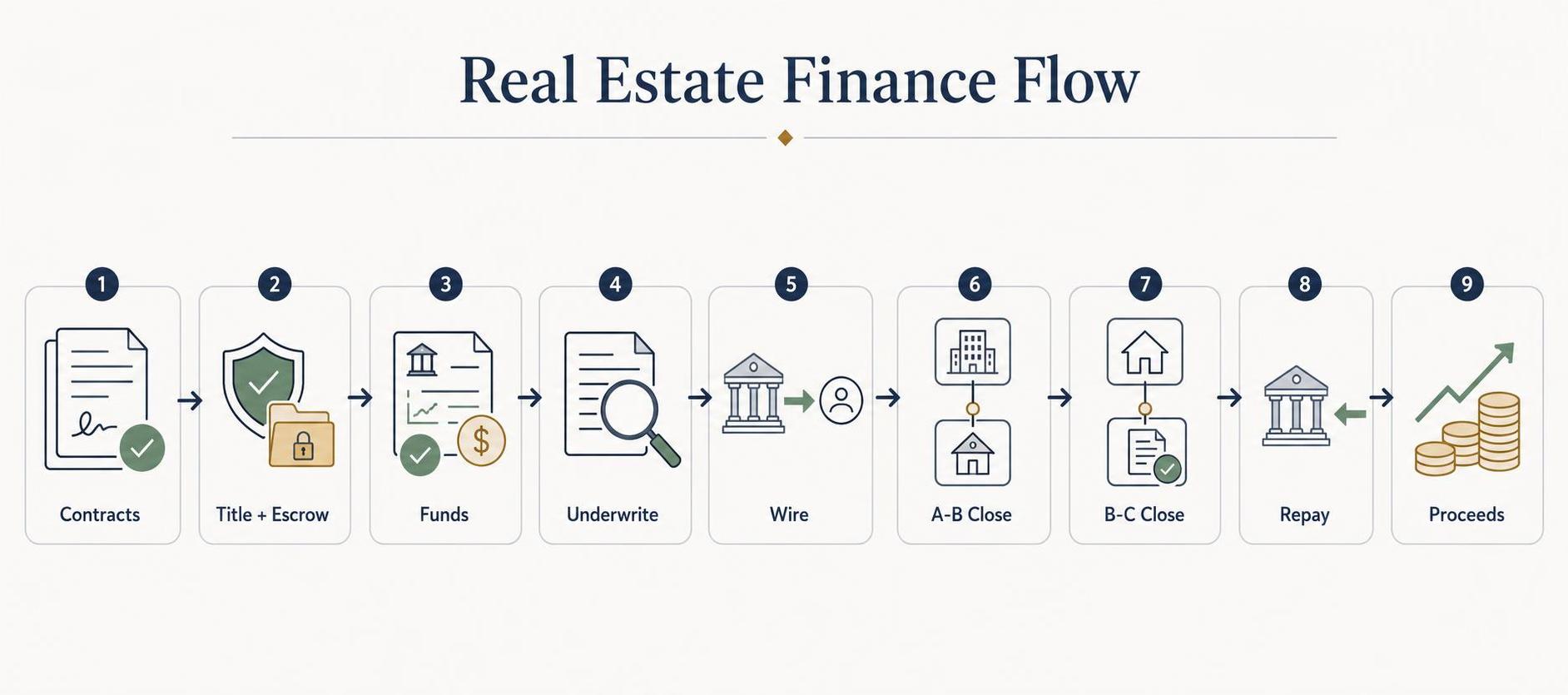
Before a lender reviews proof of liquidity, your file should be organized enough to answer basic underwriting questions quickly.
Borrower Readiness Checklist
Before you request transactional funding, confirm:
- [ ] Both the A-to-B and B-to-C contracts are fully executed with no open contingencies.
- [ ] The end buyer (B-to-C) has verified proof of funds or a cleared loan commitment.
- [ ] Both closings are scheduled for the same day (or in the correct sequence for your state), with a realistic buffer built in.
- [ ] A preliminary title report has been pulled and reviewed for liens, judgments, or title defects.
- [ ] The title or escrow company handling the closing has experience with double closings and understands the disbursement sequencing.
- [ ] Written escrow instructions specify how and when funds move between the two closings.
- [ ] The spread between purchase and resale price covers the transactional funding fee, all closing costs on both legs, and leaves meaningful margin.
- [ ] Entity names on both contracts match the entity requesting funding.
- [ ] The property address and legal description match across both contracts and the title report.
- [ ] There’s a fallback plan if the B-to-C closing is delayed by a day or two (does the title company allow it, and does the funding source need advance notice).
Running through this list before you call a lender turns the funding conversation into a formality instead of a negotiation.
FAQ
How far in advance should I request transactional funding?
As soon as the B-to-C contract is signed and the closing date is set, ideally several business days before closing, not the day before. Lenders need time to review title, contracts, and escrow instructions. Rushed requests are where problems get missed.
Does transactional funding require a credit check or income verification?
No. Because the loan is repaid the same day from the B-to-C closing proceeds, transactional funding underwriting focuses on the deal’s documentation and title, not your credit or income.
What happens if the B-to-C closing doesn’t happen on the same day?
This depends on the lender and your state’s closing practices. Some transactional funding arrangements allow a short gap between closings; others require same-day. Confirm this with your funding source before the A-to-B closing, not after.
Can transactional funding be used without a title company experienced in double closings?
It’s not a good idea. The disbursement sequencing and separate settlement statements required for a double closing are specific enough that an inexperienced settlement agent can create delays or disclosure issues, even with a well-documented deal.
Is transactional funding only for wholesalers?
No. While wholesalers use it often for assignment-style double closings, it’s also used by investors, flippers structuring back-to-back sales, and in some commercial or multifamily syndication deals where a sponsor needs same-day capital to control a property before an end buyer’s funds arrive.
What size deals qualify?
This varies by funding source and by the strength of the paperwork, title, contracts, and confirmed buyer, rather than a fixed dollar amount.
If you’re structuring a double closing and want to confirm your deal is actually funding-ready before you request capital, reach out through JointVentureLoans.com to walk through the contracts, title, and timeline together. Getting that review done a few days early is usually the difference between a same-day close that goes smoothly and one that doesn’t happen at all.
Further Reading and Source Context
These outside references can help you compare definitions, market language, and general real estate financing context. They are provided for education only and do not imply endorsement by those publishers: