
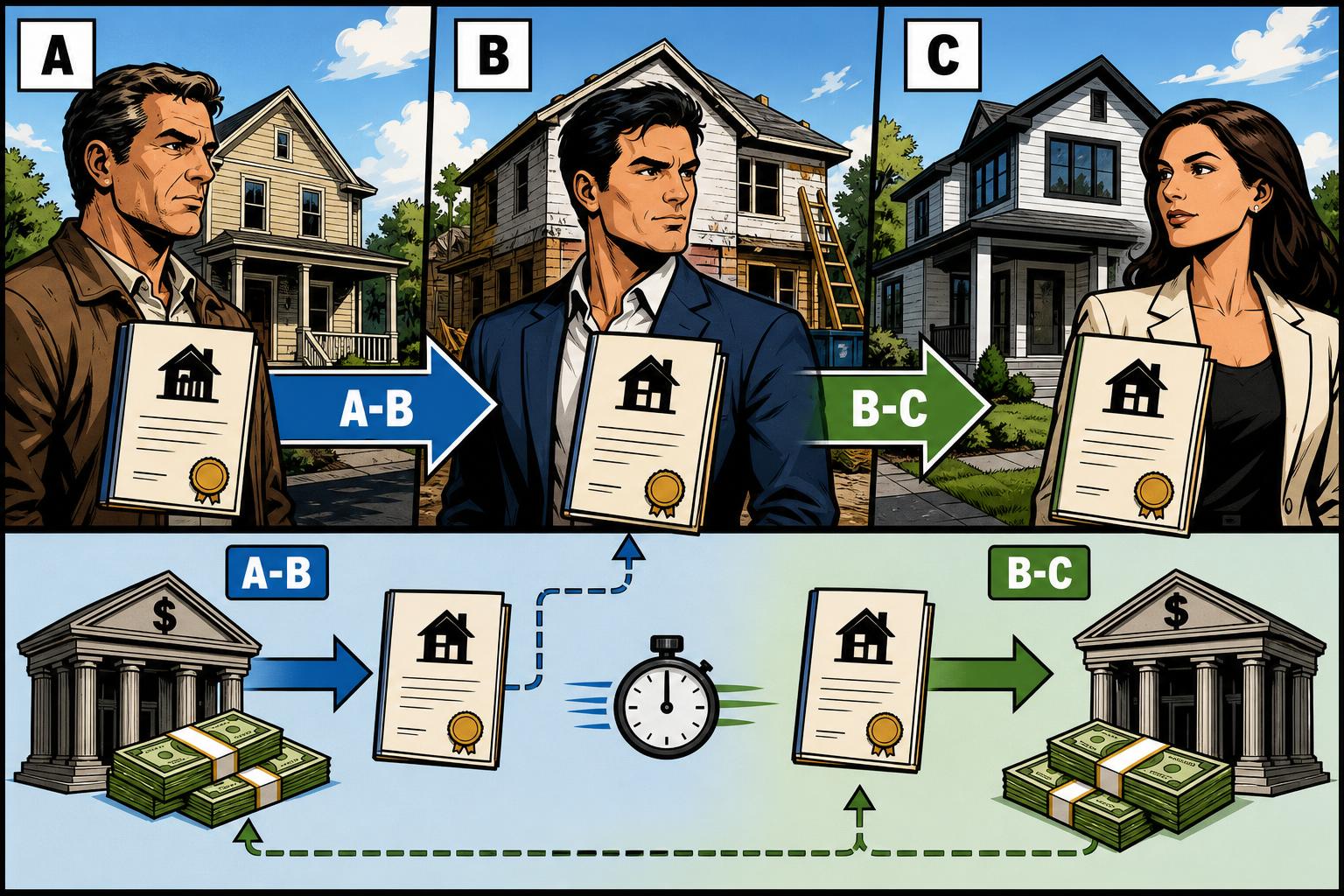
Most transactional funding requests stall for one main reason: the borrower has a signed contract and a buyer lined up, but the file isn’t ready for a lender to review quickly. The capital issue is simple. The A-B purchase needs to close with real funds, and the B-C sale is what pays everyone back. If there’s any doubt about that second closing, the first one becomes hard to fund.
If you’re new to this, start with The Ultimate Guide to Transactional Funding & Double Closings and the walkthrough on how transactional funding for double closing works in 2026. This article focuses on what you should have ready before asking anyone for money.
Why Readiness Matters More Here Than on a Standard Loan
Traditional lenders spend weeks checking your income, credit, and collateral. Transactional funding is underwritten in days, sometimes hours. The loan usually lasts just a day or two. That speed only works if your file is clean when it reaches the lender.
The risk is different, too. The lender isn’t betting on your long-term cash flow. Repayment comes from your end buyer’s closing. So the focus is on the transaction itself: is the end buyer real and funded, is the title clear, is the escrow set up properly, and does the math still work if something slips?
If you come prepared with those answers documented, you’ll get a faster, smoother decision. If you say, “the buyer is solid, I’ll send the paperwork later,” you’re asking the lender to take on risk you haven’t even checked yourself.
The Documents That Should Already Be in Your Folder
Think of this as the minimum package. Missing something doesn’t always kill a deal, but every gap needs an explanation.
A-B purchase contract: This is your contract with the original seller. It should be fully signed, with correct legal names, property address, price, closing date, and any assignment or double-closing language. If the contract doesn’t mention resale or restricts assignment, you need to explain how you’re handling that. Some sellers push back when they realize the property is being resold the same day, so the contract wording matters.
B-C sale contract: This is your agreement with the end buyer and the key document in the process. It needs to be signed and list a price that covers both the funding and your expenses. The closing date should align with the A-B closing. The lender pays close attention to contingencies like financing, inspection, or appraisal because any of these can jeopardize the second closing.
Proof the end buyer can close: If the buyer is paying cash, you need a recent proof-of-funds letter or statement, ideally already shared with the title or closing agent. If they’re financing, the lender wants to know where that loan stands. A cash buyer with documented funds and a financed buyer who hasn’t been approved are very different risks.
Title and closing agent details: Know who’s handling both closings, whether they’re comfortable with a simultaneous or back-to-back setup, and if they’ll accept the lender’s closing instructions. Having the agent’s contact info and a preliminary title report or commitment on hand saves days.
Earnest money confirmation: Receipts or written confirmation showing the earnest money deposit on the A-B contract and the deposit from your end buyer on the B-C contract tell the lender both sides have real money in the deal.
Your entity and ID documents: If you’re buying through an LLC, have the operating agreement, EIN letter, and a government ID for the signer ready. Lenders can’t move quickly if they have to chase these down.
A settlement or deal sheet: A one-page summary of purchase price, resale price, expected closing costs, funding fee, and your projected net. If your numbers don’t add up, the lender’s won’t either.
What the Closing Agent Needs From You
Borrowers often treat the title or closing agent as a formality. They’re not. They’re central to protecting the deal.
In a double closing, the agent holds funds and disburses them according to written instructions. For the lender, the key question is whether the B-C funds will flow through the same office before any money goes to the lender or you. Funding on the A-B side should be tied by instruction to the B-C closing, so proceeds from the second closing repay the first.
Settlement practices vary by state. Some states use attorneys instead of title companies for closings, Georgia is one of them. If you’re seeking transactional funding in Georgia, find out early if your closing attorney has handled back-to-back closings and if their office is comfortable with the structure and lender’s instructions. For a good overview of escrow and settlement agents, the California Department of Real Estate’s escrow reference is clear, though local rules differ.
The numbers on the settlement statement matter, too. The CFPB’s closing disclosure explainer is written for consumer mortgages but shows how closing figures are presented and why the amount due at closing usually has to be delivered by wire or cashier’s check. It’s a good reminder: closing funds need to be in the right account, in the right form, before the appointment.
What I Would Review Before Funding This
When a request lands on my desk, I work through a short list of questions. Borrowers who prepare for these get answers faster.
Is the spread real? I compare the A-B price to the B-C price, then subtract closing costs on both sides, the funding fee, and any carrying costs. A thin margin can be fine if both contracts are solid. A thin margin on a shaky B-C contract is not.
Who is the end buyer, and how do they close? A cash buyer with verified funds is the cleanest. A buyer relying on a lender adds timing risk, appraisal risk, and conditions that can delay the date. I want to know what’s actually approved, not what’s expected.
Can the B-C contract be canceled? I read every contingency. An open inspection or financing contingency means the buyer can still walk. That’s not an automatic no, but it affects sizing, timing, and whether I want more documentation first.
Is the title clean enough to close twice? A title commitment showing liens, judgments, probate issues, or unresolved ownership questions can break the sequence. If the A-B seller can’t deliver clean title, there’s no B-C closing.
Do the closing instructions protect repayment? I want written instructions making it clear funds don’t release until the second closing is ready. A closing protection letter from the agent is another layer worth asking about. These structural protections matter more than any promise on a phone call.
What happens if the B-C closing slips by a week? Funding that’s supposed to last a day or two but stays outstanding for ten has a different risk profile. I want to know the plan, who’s responsible, and whether the numbers still work.
Does the borrower have a track record with this structure? Experience isn’t required, but it changes how much verification I want. A first-time borrower with a well-prepared file can still be approved. A borrower with several closings but a messy file will still get questions.
Red Flags
These slow down or stop a request. Most are fixable if caught before submitting.
- The end buyer is unnamed or unverified. “I have a buyer” is not a document. If the B-C contract isn’t signed, the file isn’t ready.
- No proof of funds, or proof that doesn’t match. A statement in a different name, an old balance, or a screenshot with details removed raises more questions than it answers.
- Financing or inspection contingencies on the B-C side with weeks left. The deal may still work, but the lender is funding into unresolved risk.
- Inconsistent dates. A-B closing on the 15th and B-C closing on the 20th means someone is funding five days of gap with no plan.
- Assignment restrictions in the A-B contract that the borrower hasn’t addressed. If the seller can object or cancel on learning of the resale, the sequence isn’t secure.
- A closing agent unfamiliar with the structure. An agent unsure about simultaneous or back-to-back closings, or who resists the lender’s instructions, causes delays.
- Numbers that depend on everything going perfectly. If your projected net disappears when one cost is higher than expected, the deal has no margin for the usual surprises.
- Pressure to skip steps. A borrower who wants to fund before the title commitment arrives or without written instructions is describing a deal that isn’t ready.
Hypothetical Example: A Double Closing in Atlanta, Georgia
This is just an example, not a real transaction. The numbers are rounded to show the underwriting logic, not a quote.
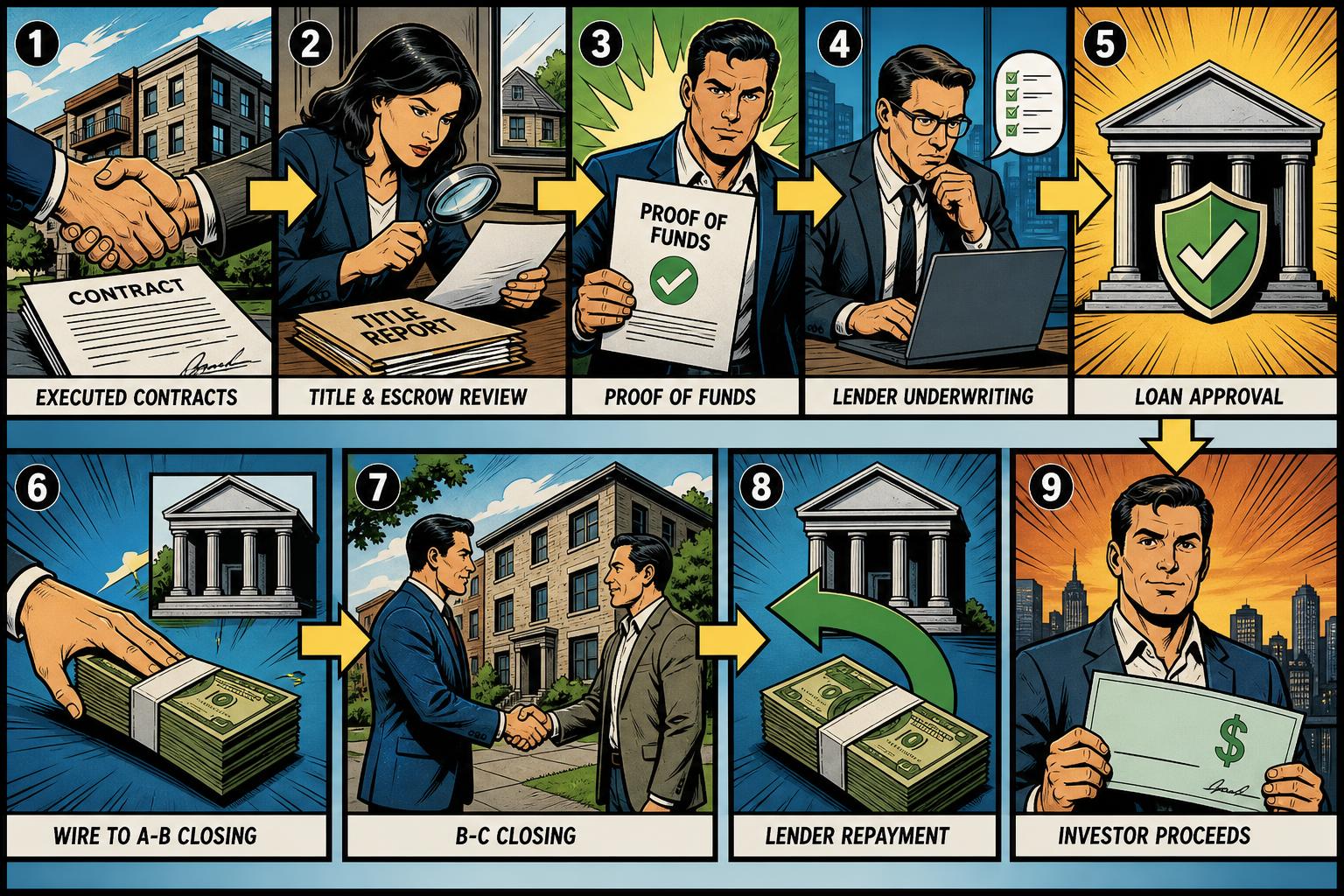
An Atlanta investor has a signed contract to buy a single-family property from an estate seller for $142,000, closing in nine days. The investor also has a signed contract to sell the same property to a cash buyer for $171,500, closing the same day through the same closing attorney’s office. The investor doesn’t have $142,000 in liquid funds and needs transactional funding for the A-B purchase.
The investor’s deal sheet looks like this:
- A-B purchase price: $142,000
- B-C sale price: $171,500
- Gross spread: $29,500
- Estimated closing costs, both sides combined: $3,400
- Transactional funding fee: $2,800
- Projected net to the investor: $23,300
Before sending the request, the investor assembles:
- Both contracts, fully signed, with matching closing dates
- A proof-of-funds letter from the end buyer’s bank, dated within the past week
- Confirmation that earnest money deposits on both sides have been received
- The title commitment on the property, showing no unresolved liens
- Written confirmation from the closing attorney that the office will handle both closings the same day and accept the lender’s disbursement instructions
- The investor’s LLC documents and signer ID
From the lender’s side, the review is simple. The end buyer is paying cash with verified funds. The B-C contract has no financing contingency, and the inspection period has ended. The title is clean enough to close. The closing attorney’s instructions tie funding release to the B-C closing. The margin is wide enough that even if closing costs run $1,500 over estimate, the borrower still nets a healthy figure and repayment isn’t in question.
Now change one fact. Suppose the end buyer is using a loan that hasn’t been approved, and the B-C contract has an appraisal contingency. The same $29,500 spread now carries a very different risk. If the appraisal comes in low, the buyer may renegotiate or walk, and the funding is outstanding against a closing that may not happen. The request isn’t necessarily dead, but it needs more information, a different structure, or both.
That contrast is the point. The spread is the same. The preparation is not.
Before a lender reviews proof of liquidity, your file should be organized enough to answer basic underwriting questions quickly.
Borrower Readiness Checklist
Use this before submitting any transactional funding request. If you can’t check an item, know why and be ready to explain it.
Contracts
- A-B purchase contract fully signed
- B-C sale contract fully signed
- Closing dates aligned, with a realistic plan if either slips
- Assignment or resale language reviewed in the A-B contract
- All contingencies on the B-C contract identified, with status noted
End buyer
- Buyer’s name and entity confirmed
- Proof of funds or financing status documented
- Earnest money deposit confirmed
Title and closing
- Closing agent or attorney identified for both closings
- Agent confirmed comfortable with the back-to-back or simultaneous structure
- Preliminary title report or commitment reviewed
- Written closing instructions ready to tie funding to the B-C closing
Numbers
- Deal sheet showing purchase price, resale price, costs, fee, and net
- Margin tested against higher-than-expected costs
- A plan for what happens if the B-C closing is delayed
Borrower documents
- Entity documents, EIN letter, and operating agreement
- Government ID for signers
- Clear point of contact for questions during review
If you’re working outside single-family deals, the same logic applies but with more moving parts. Check out our articles on transactional funding for commercial and multifamily syndications and transactional funding for commercial real estate beyond single-family deals to see how larger deals change the documentation and timing.
Frequently Asked Questions
How early should I contact a lender?
As soon as both contracts are signed, and sometimes earlier if you want to confirm the structure works. Contacting a lender the day before closing leaves no room to fix anything.
Do I need perfect credit to get transactional funding?
Credit usually isn’t the main factor because repayment comes from the end buyer’s closing, not your income. That said, lenders still check your identity, entity, and track record. The transaction carries most of the weight.
What if my end buyer is using a loan instead of cash?
It can still work, but expect more questions. The lender will want to know the loan stage, appraisal status, and expected closing date. Each unresolved condition adds timing and execution risk.
Can the same closing agent handle both sides?
Often yes, and it usually makes coordination easier. What matters is that the agent understands the structure, follows written instructions, and confirms the B-C funds flow through the same closing before the lender is repaid.
What fees should I plan for?
Transactional funding fees vary by deal size, structure, and timing. Get them in writing before you commit. Include the funding fee, both sides’ closing costs, and a cushion for surprises in your deal sheet.
What if the B-C closing falls through after I’ve been funded?
That’s the risk the structure is designed to manage, which is why the end buyer’s strength and closing instructions matter so much. Talk through this with the lender before funding, not after. No lender can promise a deal will close, and you should be wary of anyone who does.
Is this legal advice?
No. Closing practices, disclosure requirements, and contract rules differ by state. Work with a qualified real estate attorney or closing agent in the state where the property is located.
Getting Your File Ready
Transactional funding works when the second closing is credible and the paperwork proves it. Most delays come from missing documents, unresolved contingencies, or a closing agent brought in too late. Fixing those before you submit costs an afternoon. Fixing them after costs you the deal.
If you have two signed contracts and want a straightforward read on whether the file is ready, review the Transactional Funding page and send your deal details through JointVentureLoans.com. Have both contracts, the end buyer’s proof of funds, and your closing agent’s contact info ready, and we can quickly tell you what’s missing and what the structure looks like.
Further Reading and Source Context
These outside references can help you compare definitions, market language, and general real estate financing context. They are provided for education only and do not imply endorsement by those publishers:
- [LOANS Section 3.2 RMS Manual of Examination Policies 3.2-1 Loans (3-2026)
- Small Business Lending Survey 21 SECTION 3 Loan Underwriting and Approval
- I'm about to close on a real estate purchase transaction with a mortgage. What can I expect in the mortgage closing process? | Consumer Financial Protection Bureau