
Most investors asking about EMD funding usually have plenty of deals but not enough cash to cover multiple deposits at once. Sellers often want a deposit wired within a day or two of signing. Meanwhile, the same investor might have a flip waiting on a draw, a rental closing soon, and a reserve account they’d rather not touch. Each deposit might be small compared to the purchase price, but $10,000 to $50,000 deposits add up quickly when you’re under contract on several properties.
EMD funding is short-term capital that covers the earnest money deposit so you don’t have to tie up your own cash. Used wisely, it helps keep your liquidity flowing. Used poorly, it can become an expensive habit that hides bigger issues. Here’s how I decide when it makes sense, and when it doesn’t.
What EMD funding actually does
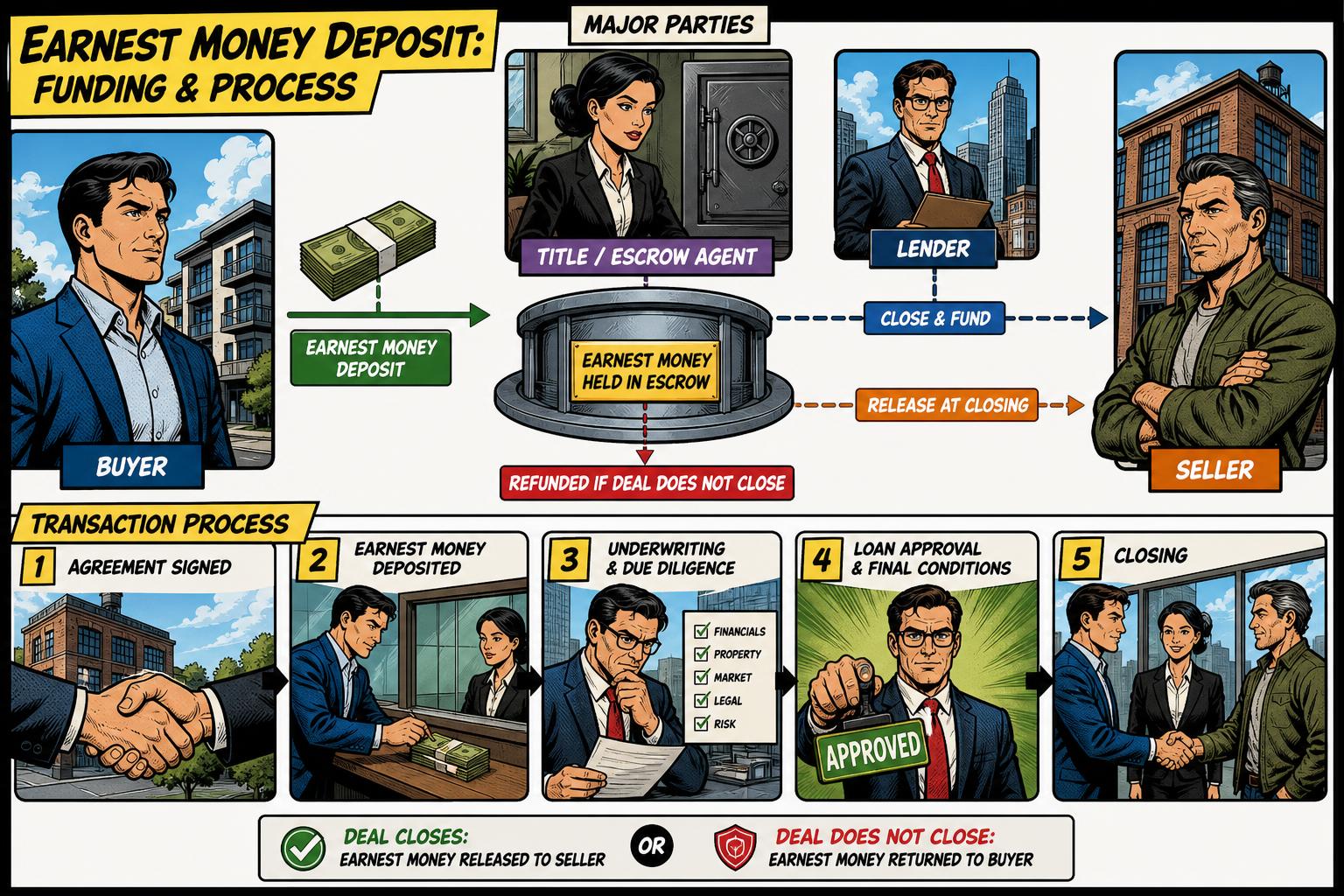
An earnest money deposit is your good-faith money, held by escrow or title after signing the contract. Investopedia calls it a deposit showing you intend to close. The National Association of Realtors says the same: funds sit in escrow and apply toward the purchase if you close.
EMD funding puts someone else’s money into that escrow account. You still own the contract and the outcome. The funder gets paid from the deal proceeds, your payout, or both, depending on the arrangement. If you want the details, our investor’s guide to $10K+ EMDs breaks it down.
Two things matter here:
- The funding is only as safe as the contract behind it. If you miss a deadline and the deposit is at risk, so is the funder’s money.
- The funder is paid for a short period, usually from signing until the contract closes, is assigned, or is canceled under a contingency.
If the deal is solid, the window is short, and the exit is clear, the cost can be reasonable. If any of those are shaky, the cost is the least of your worries.
When EMD funding makes sense
Here are five situations where EMD funding can help:
- You’re juggling multiple contracts. Wholesalers, flippers, and active investors often have several deposits out at once. Using your own cash for all of them limits how many deals you can pursue. Outside capital for some deposits keeps your cash free for rehab, closing, and reserves.
- The deposit is large compared to your liquid cash. A $15,000 deposit might be easy for one investor but a stretch for another. If putting up the deposit drains your reserves, paying a fee to keep cash on hand can be smart.
- Your cash is tied up elsewhere for a known time. Maybe your money is locked in a rehab draw, a 1031 exchange, or a pending sale. EMD funding can bridge that gap when you know exactly when your cash returns.
- The seller or agent expects a strong earnest money deposit. In a competitive market, a bigger deposit can show you’re serious. But it only helps if the contract protects the deposit from unnecessary risk.
- You have a clear exit. A double close, assignment, or confirmed purchase loan with a set closing date gives the funder a clear repayment path. The clearer the exit, the easier it is to underwrite.
When it doesn’t make sense
Just as important: when EMD funding is a bad idea.
- You haven’t done your homework. If you haven’t run comps, checked the property, or confirmed your buyer or lender, you’re risking someone else’s money on a guess.
- The margin is thin. If the deal only works if every number is perfect, EMD fees can turn it from tight to negative.
- You plan to ignore contingency deadlines. Deposits are lost when deadlines pass. Funding the deposit doesn’t change that.
- You’re using it to stay in a deal you’d otherwise walk from. If you wouldn’t risk your own money, that’s a red flag.
- The contract can’t be reviewed. No signed purchase agreement, no clear escrow instructions, nothing to underwrite.
Understanding the deposit risk
Most investors focus on the fee. I focus on what happens to the deposit if the deal falls apart.
The purchase contract controls that. Contingencies for inspection, financing, appraisal, or title give you specific windows to cancel and get the deposit back. Outside those windows, the seller may claim it. The National Association of Realtors points out buyers shouldn’t assume they can always get the deposit back if they breach the contract, even if sellers often prefer to avoid disputes.
That matters for you and the funder. If the deposit is forfeited, you still owe the funding. So before supporting a deposit, I want to know:
- What contingencies exist and when they expire
- Who holds the deposit and under what instructions
- What happens if the seller defaults
- What happens if you cancel inside versus outside the contingency window
Your rights depend on the exact wording of the contract, not on any summary. This is true whether you're in Arizona, Texas, Ohio, or anywhere else.
How lenders look at deposit size and source
Conventional lenders care about earnest money for a different reason, but the logic applies. Fannie Mae’s guidance says if the deposit didn’t come from your account, you’ll need to document where it came from. Large or unusual deposits get extra scrutiny.
If you plan to finance the purchase with a loan that follows agency underwriting, a funded deposit may need explanation. Surprises in the paperwork can slow or kill a closing. Tell your lender and title company how the deposit was funded before they find out on their own.
Hypothetical example: A single-family flip in Phoenix, Arizona
This example uses made-up numbers and isn’t a real deal or quote.
Say a Phoenix investor has a single-family home under contract for $385,000. The seller wants a $15,000 earnest money deposit within two business days. The plan: buy with short-term acquisition and rehab financing, renovate, then sell.
The numbers:
- Purchase price: $385,000
- Rehab budget: $65,000
- Estimated after-repair value: $510,000
- Inspection contingency: 10 days
- Scheduled closing: 30 days after signing
- Investor’s liquid cash: $48,000, with $30,000 already set aside for rehab down payment and reserves
The investor could pay the $15,000 from the remaining $18,000, leaving about $3,000 until closing. That’s a thin cushion if the appraisal is low, the inspection finds issues, or another deal comes up.
Instead, the investor considers funding the deposit. Assume the 30-day cost is $1,500 in fees. The question: is it worth paying $1,500 to keep $15,000 in cash for 30 days?
Here’s how I’d think it through:
- Does the deal still work after the extra cost? Projected profit is about $22,000 before the fee, so $20,500 after. The deal still works, but the margin isn’t huge.
- Is the contingency window clear? The 10-day inspection period is when the investor can cancel and recover the deposit. I’d want funding timed so everyone understands the risk before that window closes.
- Is the exit documented? The investor has a lender commitment for acquisition and rehab. The deposit credits toward closing, so the funder is repaid at closing.
- What if it falls apart? If inspection finds a big problem and the investor cancels inside the window, the deposit returns to escrow and repays the funder. If the investor misses the window and walks, the deposit is at risk, and the investor still owes the funding.
The decision isn’t automatic. If the investor had $60,000 in cash and no other deals, paying a fee would be unnecessary. With a thin cash cushion and another deal in the pipeline, it might make sense. The point is the reasoning, not a guarantee.
What I would review before funding this
When someone asks me for EMD funding, I don’t want a story. I want documents and a clear repayment plan. My review usually covers:
- The signed purchase agreement, including all pages, addenda, and amendments, with deposit amount, due date, and contingency periods highlighted.
- Escrow or title company details: who holds the funds, wiring instructions verified by phone, and written deposit terms.
- The exit plan: purchase loan, cash close, assignment, or resale, and who’s on the other side.
- Deal economics: purchase price, rehab or assignment spread, and projected profit after funding costs.
- Borrower experience: past closings of similar deals or a partner with that track record.
- Liquidity and reserves: not to disqualify someone for being tight, but to see what happens if things go wrong.
- Repayment source and timing: where the money comes from and when.
- Contingency risk: how likely the deposit becomes non-refundable and what’s being done to prevent it.
- Title and seller issues: anything that could delay or block closing, like liens, probate, or unclear ownership.
If those items line up, the request is easy to evaluate. If several are missing, the conversation usually turns to what to fix first.

Red flags
Here’s what makes me pause:
- No signed contract or a contract still in draft
- Escrow instructions that don’t match the purchase agreement
- A deposit due date that’s already passed without a cure
- An exit depending on a single unconfirmed buyer or lender
- Contingency periods that expire before inspection or financing can reasonably finish
- A seller or agent pushing an unusually large deposit with no clear reason
- Wiring instructions sent by email without verbal confirmation
- Profit margins that disappear once the funding fee is added
- A borrower who can’t explain what happens if the deal doesn’t close
- Requests to fund several deposits for the same borrower with no evidence earlier ones are under control
One or two of these can often be fixed. Several together usually mean the deal needs more work before outside capital is added.
Borrower readiness checklist
Before you ask for EMD funding, have these ready:
- Fully executed purchase agreement with all addenda
- Escrow or title company contact, with deposit instructions confirmed directly
- Deposit amount, due date, and refundability terms noted
- Inspection, financing, and appraisal contingency dates on a calendar
- Written exit strategy and supporting documents (loan commitment, buyer agreement, or proof of funds)
- Deal budget showing purchase price, rehab or spread, carry, and funding cost
- Basic entity and identity documents
- A short summary of your recent similar transactions
- A plan for what you’ll do if you need to cancel
- Notice to your lender and title company about how the deposit will be sourced
Having this ready speeds up any review, whether with us or someone else. It also forces you to confirm the deal works before you commit.
Costs and alternatives to consider
EMD funding isn’t the only way to handle a deposit. Consider these options:
- Using your own cash. Cheapest in fees but ties up capital you might need.
- A line of credit. Often cheaper if you already have one but may not be available quickly.
- A partner or joint venture. You might give up some profit but gain capital and experience. Our related article on funding $10K+ deposits walks through how investors compare these routes.
- Negotiating a smaller deposit or longer deadline. Sometimes the cheapest solution is a conversation with the seller’s agent.
- Structuring with more contingency time. A longer inspection period gives you room to confirm the deal before the deposit is at risk.
Look at the total cost, not just the headline fee. A funding cost that seems small on a $15,000 deposit can matter more if closing slips by a few weeks.
Using EMD funding without creating a bigger problem
A few habits keep this tool useful:
First, fund deals you’d be comfortable funding yourself. Outside capital is for liquidity, not for covering a weak deal.
Second, track every contingency date. Most deposit losses come from missed deadlines, not bad luck.
Third, confirm the exit before you sign, not after. If you need an assignment buyer or lender to close, have them lined up.
Fourth, be honest about timing. If a closing could easily slide, plan for the cost of that delay.
Finally, keep records. Escrow receipts, wire confirmations, and funding agreements should all be in one place. If you want to see how other investors handle documentation, this overview of deposits for investors is a useful companion.
FAQ
Is EMD funding the same as a loan on the property?
Not exactly. It’s short-term capital tied to the deposit and contract, not a loan secured by the property in the usual sense. The structure varies, so read the agreement carefully.
Can I get earnest money funding in Phoenix, Arizona, or other states?
Funding is generally tied to the contract and escrow setup, not the state. Local practices and contract forms differ, so a funder will want to see your actual documents.
What happens if the deal doesn’t close?
It depends on the contract. If you cancel inside a valid contingency period, the deposit usually returns to escrow and repays the funder. If you cancel outside it, the deposit may be forfeited, and you may still owe the funding.
Do I need a signed contract first?
Yes. Without a signed purchase agreement, there’s nothing to underwrite and no deposit to place.
How much does EMD funding cost?
Pricing varies by deposit size, timeline, deal quality, and structure. I can’t give a number without seeing the transaction, and you should be wary of anyone quoting a firm cost without reviewing the contract.
Will it affect my purchase loan?
It can. Lenders often want to document the source of the deposit, and large deposits get more attention. Tell your lender early so it doesn’t become a closing issue.
Is it worth it for a small deposit?
Sometimes not. If a deposit is small compared to your cash and the fee is meaningful, paying with your own funds may make more sense.
Can wholesalers use EMD funding?
Many do, especially when holding several contracts at once. The same rules apply: a clear contract, a defined exit, and a plan if the end buyer falls through.
What if the seller defaults?
Typically, the deposit is returned to the buyer under the contract, but remedies vary. Review the default provisions before you sign.
Next step
EMD funding makes sense when it protects your liquidity on a deal that already works, with a signed contract, clear contingency dates, and a documented exit. It doesn’t make sense as a way to rescue a weak deal or avoid doing your homework.
If you have a contract and want to discuss whether outside capital fits, send us the purchase agreement, escrow details, and your exit plan at JointVentureLoans.com. We’ll tell you what we’d need to review and where the risk lies. Funding is subject to underwriting and approval, and nothing here is a commitment to lend.
Further Reading and Source Context
These outside references can help you compare definitions, market language, and general real estate financing context. They are provided for education only and do not imply endorsement by those publishers:
- [B3-4.3-09, Earnest Money Deposit (05/04/2022)
- Consumer Guide: Escrow and Earnest Money
- Earnest Money in Real Estate: Refunds, Returns and Regulations
- Earnest Money in Real Estate: Definition and How It Works